Free EU-Wide Shipping on Orders Over €200
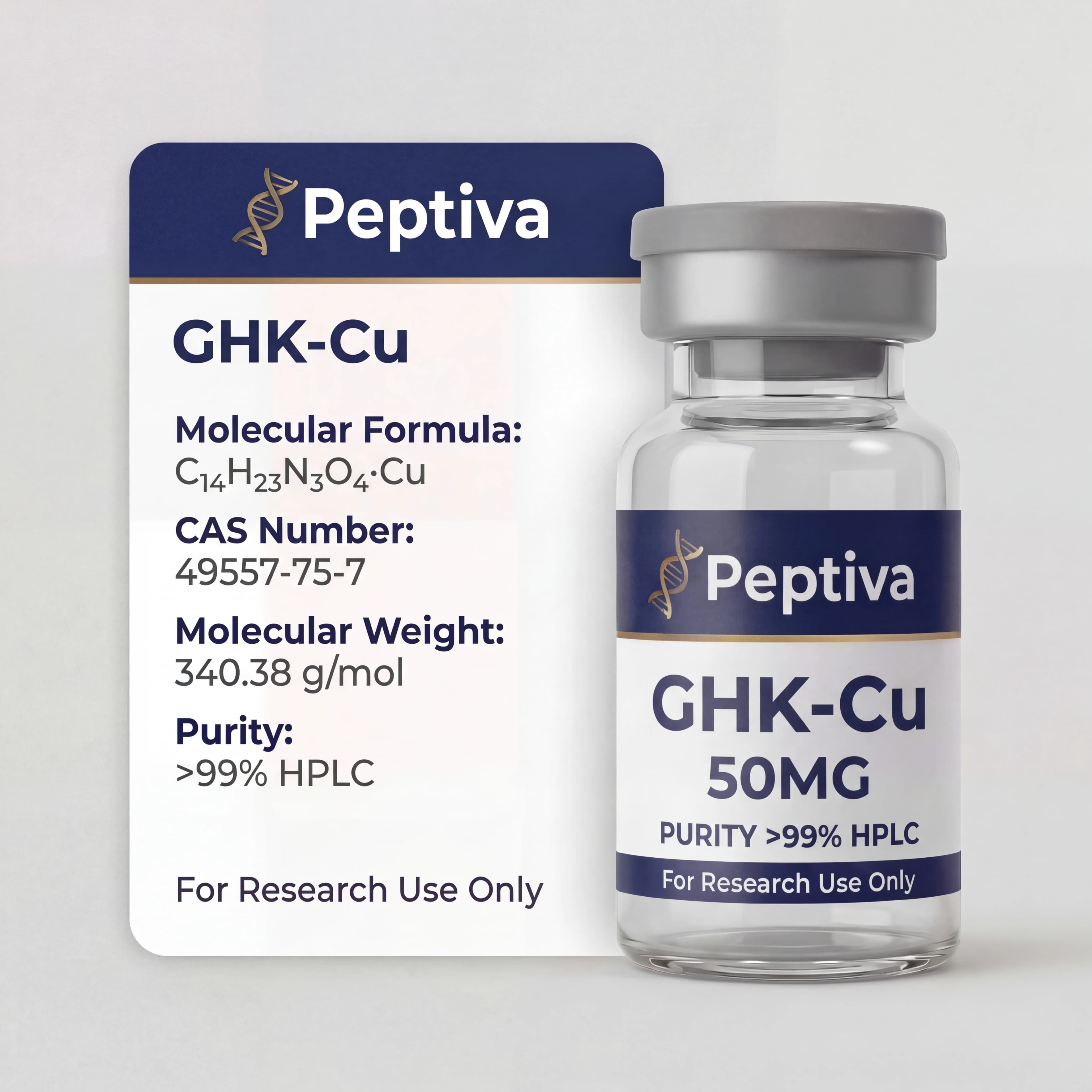
This product is intended solely for use as a research chemical in vitro and laboratory experimentation by licensed, qualified professionals.
GHK-Cu
From 30,00 €
0,60 € / mg
GHK-Cu is a naturally occurring copper-binding tripeptide found in human plasma, saliva, and urine. Extensively researched for wound healing, collagen synthesis, and antioxidant properties. Available as 50mg or 100mg lyophilized powder, ≥99% purity.
Bulk Discounts
- Buy 3+ for 28,50 € each and save 5%
- Buy 5+ for 27,00 € each and save 10%
- Buy 10+ for 25,50 € each and save 15%
Ships Tomorrow - order cutoff passed
Free EU Shipping on orders over €200
Third party tested
GHK-Cu—
30,00 €
Characteristics
| Molecular Formula | C14H23CuN6O4 |
| CAS | 49557-75-7 |
| Molar Mass | 403.92 g/mol |
| Amino Acid Sequence | Gly-His-Lys:Cu(II) |
| Synonyms | Copper Peptide, Glycyl-L-histidyl-L-lysine:copper(II) |
| Solubility | Soluble in water |
| Organoleptic Profile | Blue powder (copper complexation) |
| Physical Form | Lyophilized powder |
How does GHK-Cu work?
GHK-Cu stimulates collagen synthesis in fibroblast cultures and regulates the activity of metalloproteinases — enzymes involved in extracellular matrix remodeling. The copper-binding properties enable unique biological activities distinct from other bioactive peptides.
Research indicates GHK-Cu may upregulate antioxidant enzymes including superoxide dismutase (SOD) and glutathione peroxidase. It also appears to modulate inflammatory cytokines and reduce oxidative stress markers.
Microarray studies suggest GHK-Cu influences the expression of numerous genes involved in tissue repair, inflammation, and cellular stress responses, generating interest in regenerative medicine research.
References
- 1Pickart L, et al. "GHK Peptide as a Natural Modulator of Multiple Cellular Pathways in Skin Regeneration" BioMed Research International. 2015. doi:10.1155/2015/648108
- 2Pickart L, Margolina A. "Regenerative and Protective Actions of the GHK-Cu Peptide in the Light of the New Gene Data" International Journal of Molecular Sciences. 2018. doi:10.3390/ijms19071987
Resource
All products on this site are for research and development use only. Products are not for human consumption of any kind. The statements made on this website have not been evaluated by the US Food and Drug Administration or the European Medicines Agency. Products are not intended to diagnose, treat, cure, or prevent any disease.